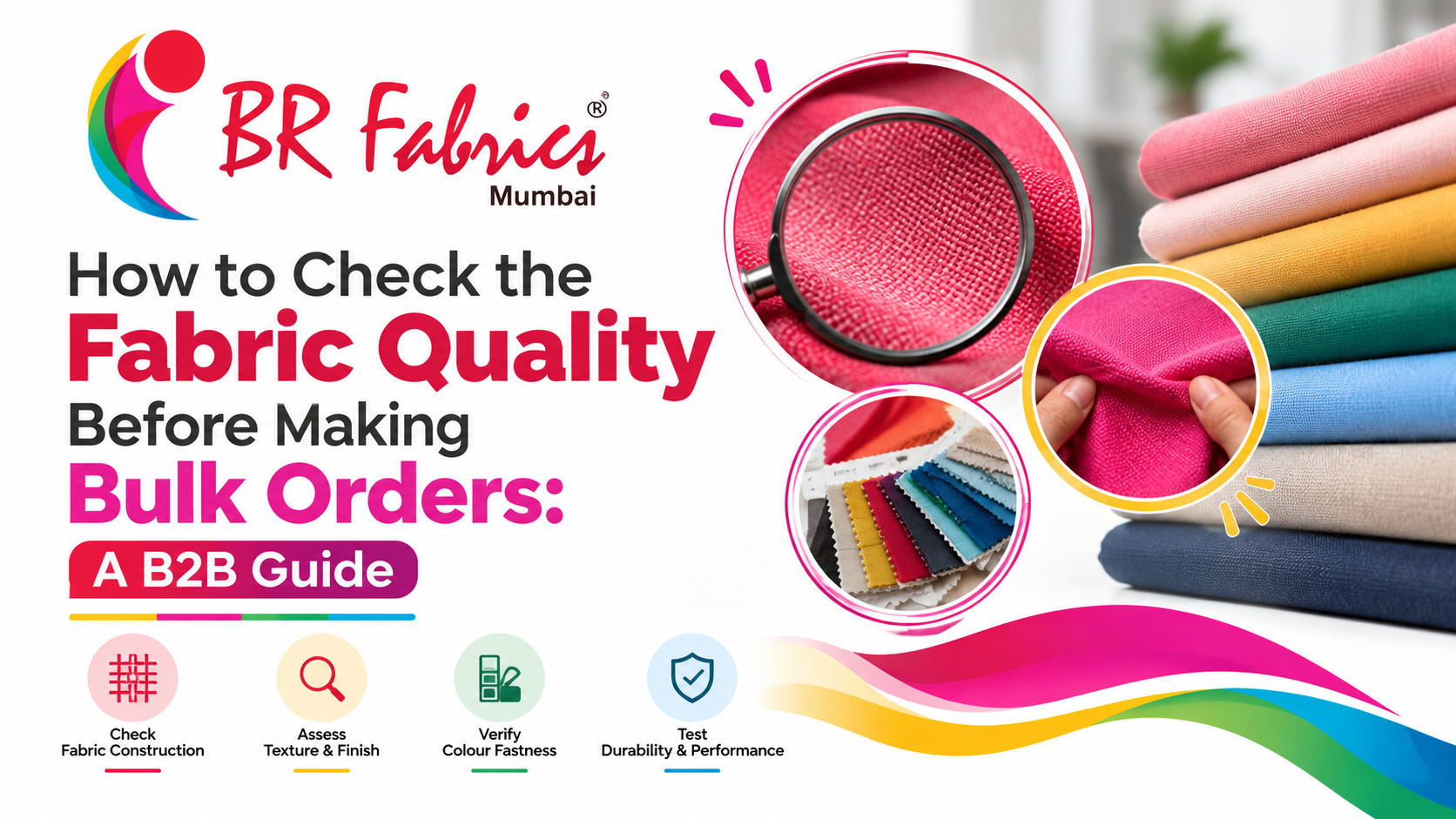
Dealing with fabric quality is of utmost importance in providing a high-quality finished product to the customer. If you are an intermediary or an apparel manufacturer, then understanding the importance of a clothing quality control checklist is necessary in order to avoid customer complaints, additional costs and delayed shipments. Checking the fabric quality while bulk ordering apparently means analyzing its tensile strength, colour, poor printing and fabric shrinkage. Such factor evaluation holds great importance before production with the purpose of producing high-quality garments eventually. However, if such factors are not considered before production, then it might make it harder to alter the fabric after production.
Welcome to this blog post where you’ll be introduced to what it means when we say clothing quality control, along with the right guidance for fabric buyers to analyse fabric quality before bulk ordering, so continue reading.
What does clothing quality control mean?
Generally, clothing quality control is associated with the practice of analysing the cloth quality in terms of its measurements, workmanship, raw materials, along with appearance and functionality. Such factors can make garment production quite an easy process with quality results. As a fabric buyer, you must not go for the appearance and outer look of the fabric; instead, there are a few things that you may consider before bulk ordering, which are mentioned below:-
- Fabric colour
- Fabric defects (shrinkage)
- Printing and embroidering quality
- Stitch density
- Fabric composition and GSM
- Labels & overall appearance
- Packing & functionality
Here are the key points to analyse before fabric bulk ordering!
Being a B2B buyer, you must be aware of the inherent qualities of the fabric rather than relying on its appearance for proper evaluation. Analysing its composition, colour fastness, along with technical specifications, just before bulk ordering, plays a crucial role in preventing the customers’ rejection of the goods.
- Create a fabric specification list.
This is one of the necessary factors that most B2B buyers almost forget while bulk ordering the fabric: creating the fabric-specific list, apparently including the quality standard you actually require.
- Mention the specific fabric composition and the blend before bulk ordering, for instance, 95% cotton and 5% Elastane.
- Also, mention the specific GSM required to ensure proper weight and density of the fabric.
- Specifically mention the construction type, whether you require a weave or a knit.
- Shade and specific finishes should also be mentioned to let the manufacturers know about your fabric requirements.
- Such points must be mentioned in the agreement before the production process begins.
- Request samples and verify certifications.
- When it comes to ordering fabric in bulk, ensuring the right type and quality of fabric by thoroughly asking for physical swatches can make a huge difference.
- You can ask the manufacturer to provide you with the “sampling yardage”, providing an apparent idea about the exact fabric quality before ordering it in bulk.
- Choose the fabric that provides you with specific certifications such as OEKO-TEX and GOTS, crucial for assuring you that the fabric quality eliminates the use of harmful substances.
- By being certified with the Global Organic Textile Standard, you’ll be protected from further compliance risk, ensuring the use of fabric manufacturing under eco-friendly development.
- Evaluate some physical checks.
- With the physical samples, you must ensure the fabric quality in terms of its density and opacity tests.
- Check the fabric quality in bright light with the aim of finding thin gaps, which clearly indicate poor quality.
- You can also check the fabric quality by crushing it in your hand, and if it recovers in its original form, then it reflects its quite better quality.
- You can also check its thread quality by seeing whether it gets loose easily or not.
- Check out the fabric after washing.
- With the provided samples, you can test out how the fabric turns out after washing, providing real-time results.
- Make sure to wash and dry the provided samples with the aim of analyzing their shrinkage rate.
- Check out its colourfastness quality, whether the dye remains or fades out easily in one wash only.
The Bottom Line!
Summing up the above-mentioned points, you might have understood the crucial points that you must analyze before buying fabric in bulk. Ensuring the fabric tensile strength, shrinkage rate, along with GSM, is important with the aim of producing the finished garment with high quality. Also, being a buyer does not mean evaluating the clothing quality only before production; even throughout large production runs, you must consider checking the fabric quality.
You can engage with BR Fabrics, providing you with the right textile standards with the purpose of staying compliant and reducing risk. We deal in almost all kinds of fabric, such as cotton, polyester and many more, ensuring the right source and effective manufacturing details for effective results.
Frequently Asked Questions
What exactly does fabric finish mean in clothing manufacturing?
It means utilizing a specific chemical or solution on the unfinished product with the aim of ensuring its durability, along with compliance standards for B2B buyers.
Why is PPS crucial in clothing manufacturing?
A pre-production sample is associated with the sample clothing products before bulk production, with the purpose of evaluating the right design, manufacturing and colourfastness, which is crucial in clothing manufacturing for better-quality garments.
What requirements must be provided before bulk production?
Make sure to provide the exact fabric specification, target quantity, size chart and artwork before bulk production to get high-quality fabrics.
Is clothing inspection at each production stage necessary?
Yes, ensuring proper clothing inspection at each production stage is crucial to ensure the fine quality of the fabric used.